Common Mallow - The Gentle Soother
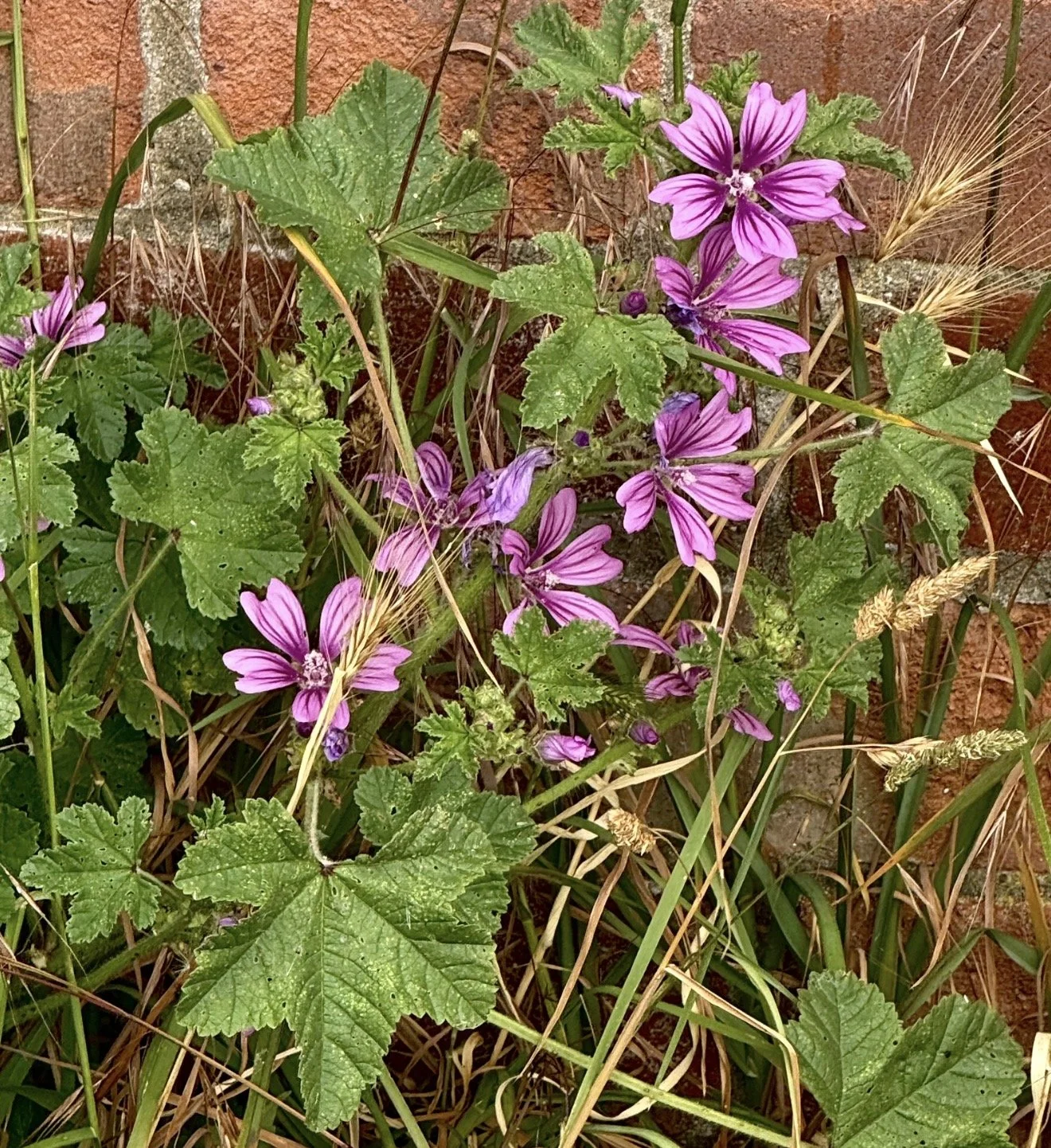
Malva sylvestris
Folk Names: Wood Mallow, Tall Mallow, Blue Mallow
Parts used: Leaves and flowers
Energetics: Moist, sweet, slightly cooling
The Mallow family name, Malvaceae, originates from Malva, which is the Latin word for the mallow plant. This Latin term is rooted in ancient Greek and roughly translates to ‘soft’. The name sylvestris means “of the woods” or “wild”.
The common mallow has been outshone by its more widely known relative, Marshmallow (Althaea officinalis), but I think this humble perennial plant still deserves the spotlight. It’s much more commonly seen in the wild, and it has many medicinal benefits. You may have walked past this plant for years. I see it dotted all over my local area in the warmer months, and it’s a lovely colourful addition to hedgerows and riverside paths and is beloved by insects. The open nectar-rich flowers are very attractive to honeybees, bumblebees, hoverflies and butterflies, making it a valuable addition to wildlife gardens.
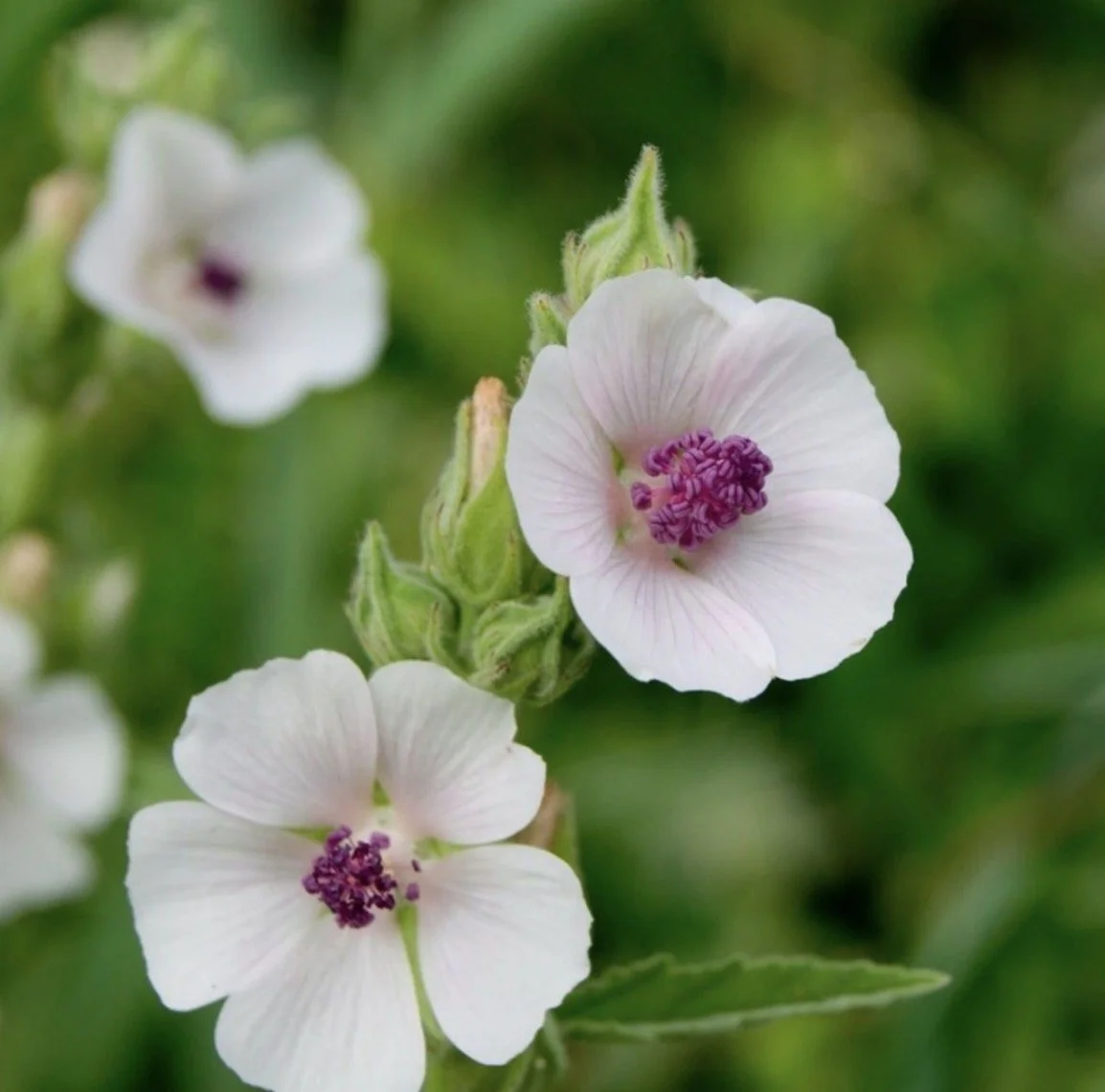
Marshmallow - Althaea officinalis
Common mallow has many of the same benefits as Marshmallow. It has a high mucilage content, which means it’s very soothing. This makes it a great herb to utilise when treating inflammation, inside and outside the body. When taken internally, usually as a tea, it is an effective herb for treating dry coughs, colds, stomach upset, and stomach ulcers.
When applied as a poultice, it’s useful for treating bruises, swelling, insect bites and stings. Historically, the flowers were chewed to alleviate a toothache. The leaves are rich in antioxidants and a source of fibre.
It is believed that the Romans introduced Common Mallow to the UK, as both an edible plant and a medicinal plant. It has since become fully naturalised in the wild. The plant was considered a ‘cure-all’ in medieval herbal medicine and was used to treat multiple conditions. Journalist and traveller William Cobbett (c. 1820s) is quoted as saying “a person must be almost criminally careless not to make a provision of this herb”. Culpeper, the famous 17th-century English herbalist, described making a mallow liquor to treat his unwell child, with great success.
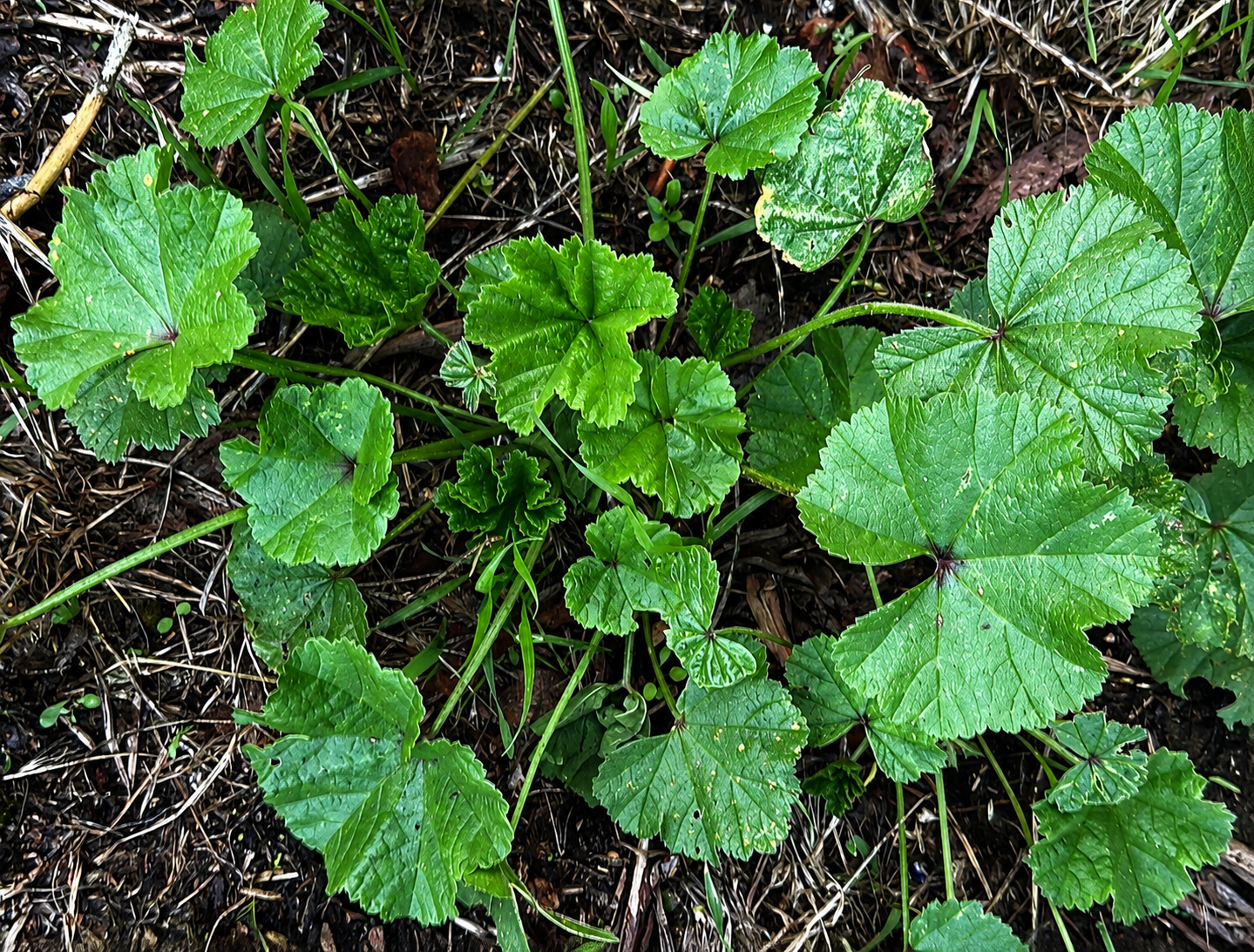
Common Mallow Leaves
Common mallow leaves are best harvested when the leaves are a healthy bright green, before the plant flowers. The flowers and flower buds can be picked in summer, but it is worth considering spring weather conditions. Due to the intense heat of Spring 2026, harvesting could have started in early May. Mallow also produces disc-shaped seeds that are edible and can be eaten as a snack. Traditionally, they are referred to as ‘cheeses’ or ‘fairy cheeses’. Isn’t that adorable? A lovely fact to share if you’re taking plant enthusiasts on a herb walk or introducing children to local flora and fauna.
Caution
When harvesting the leaves, look out for signs of Mallow rust. Large doses can cause a laxative effect. The seeds may be poisonous if ingested in large quantities.
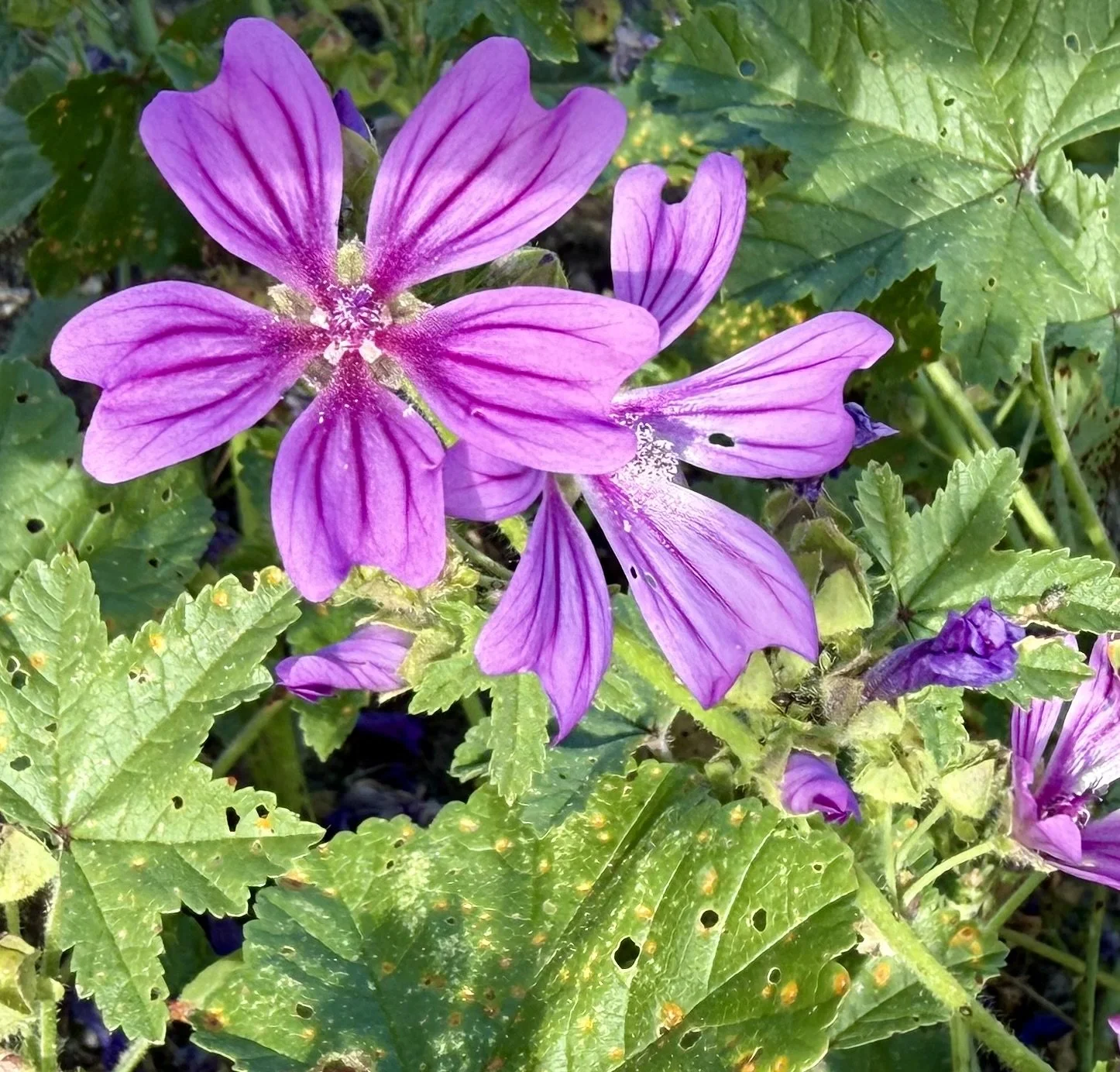
Mallow rust - visible here on the leaves. A common fungal disease caused by Puccinia malvacearum, which is known for primarily attacking the Malvaceae family.
Disclaimer
This content is for educational purposes only and is not a substitute for professional medical advice, diagnosis or treatment. Always consult a qualified medical practitioner/herbalist before starting a new herbal regimen.
Always exercise extreme caution and use multiple sources to verify positive identification when foraging and consuming wild plants. Improper identification can be deadly. Don’t forage near heavily trafficked roads, areas with industrial pollution, and agricultural field edges that may have been sprayed with pesticides. Also, consider that local councils often spray weedkiller in densely populated areas where many medicinal herbs grow.
Books Referenced:
Julie Bruton-Seal & Matthew Seal – Hedgerow Medicine
Robin Harford – Edible and Medical Wild Plants of Britain and Ireland
Elizabeth M. Williamson - Potters Herbal Cyclopaedia
