Dog Rose - The Wild Rose of the Wayside
Rosa canina
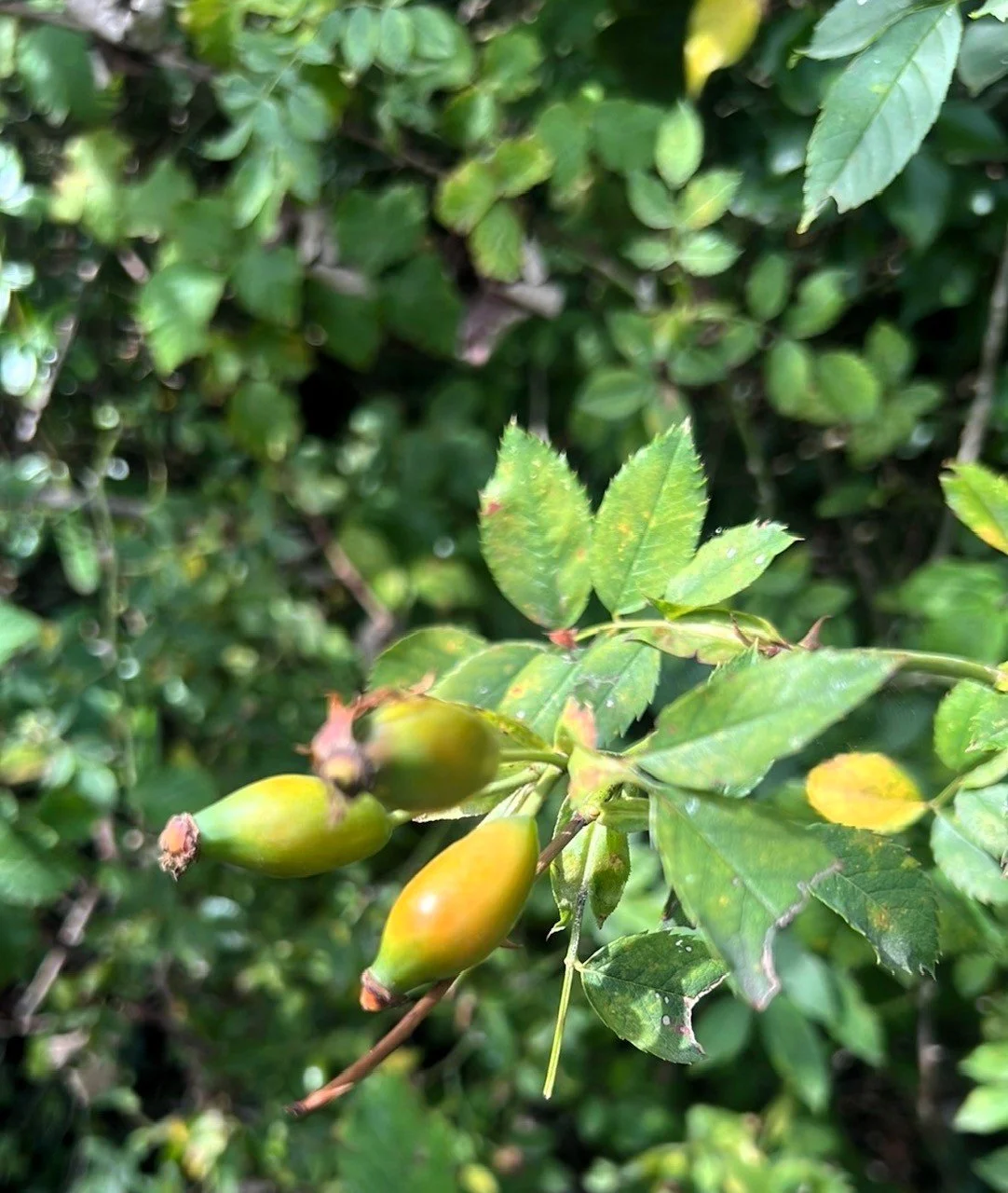
Rosehips beginning to ripen.
Photo taken in late September 2025
Folk Names: Witch’s Briar, Dog Berry, Horse-Bramble, Pig’s Nose
Parts used: Hips, Leaves & Flowers
Energetics: Cooling, Drying
A wild rose species native to Europe, Northwest Africa, and Western Asia, Rosa canina has an impressive history spanning hundreds of years. It’s a familiar sight in hedgerows, woodland edges and grasslands, producing delicate, lightly fragrant flowers in early summer, which attract pollinating insects and moths. From August onwards, this wild rose produces hips that provide sustenance to many birds, including Blackbirds, Greenfinches and Thrushes. Fallen rosehips feed small mammals living amongst the leaf litter as the weather turns colder, making it important to forage responsibly and leave enough fruit behind for the wildlife that depends on it, particularly as other food sources become scarce.
History & Origins
First recorded in botanical history by English naturalist William Turner in 1538, the plant is a member of the Rosaceae family, which includes 4,828 known species. Many familiar edible and medicinal plants belong to this family, including apples, strawberries, raspberries, hawthorn and meadowsweet. Although Dog Rose is the most common wild rose, it can sometimes be confused with Fieldbriar (Rosa agrestis) and Sweetbriar (Rosa rubiginosa).
The name Dog Rose originates from the medieval belief that the plant could cure rabies, caused by the bite of a mad dog. It is believed that this idea was later translated into the name we have today. Additionally, it is thought that the hooked thorns on the plant resemble dogs’ canines, which may also have led to its common name.
The most famous Dog Rose is the Thousand-Year Rose of Hildesheim in Germany, which has climbed the cathedral wall since around 815AD and even survived bombings in World War II. It is believed to be the oldest living rose in the world.
During World War II, when citrus fruit imports were restricted, governments had citizens and children gather dog rose hips to make vitamin C syrup, and the shrub was commonly planted in victory gardens. I think this is a brilliant example of how medicinal plants can be utilised in times of crisis. Governments aren’t always reliable, but Mother Nature always provides.
Folklore
In medieval Europe, Dog Rose was associated with protection from unwanted influences. Branches were hung near thresholds to keep away evil spirits and negativity, and the distinctive hooked thorns were incorporated into charms and spells intended to ward off harm and attract good fortune.
When preparing rosehips, always take extra care to remove the irritating hairs found within the hips. The fine hairs surrounding the seeds inside the rosehips were traditionally removed and used as “itching powder” — a childhood prank that earned the Dog Rose another place in folklore.
Identifying Dog Rose
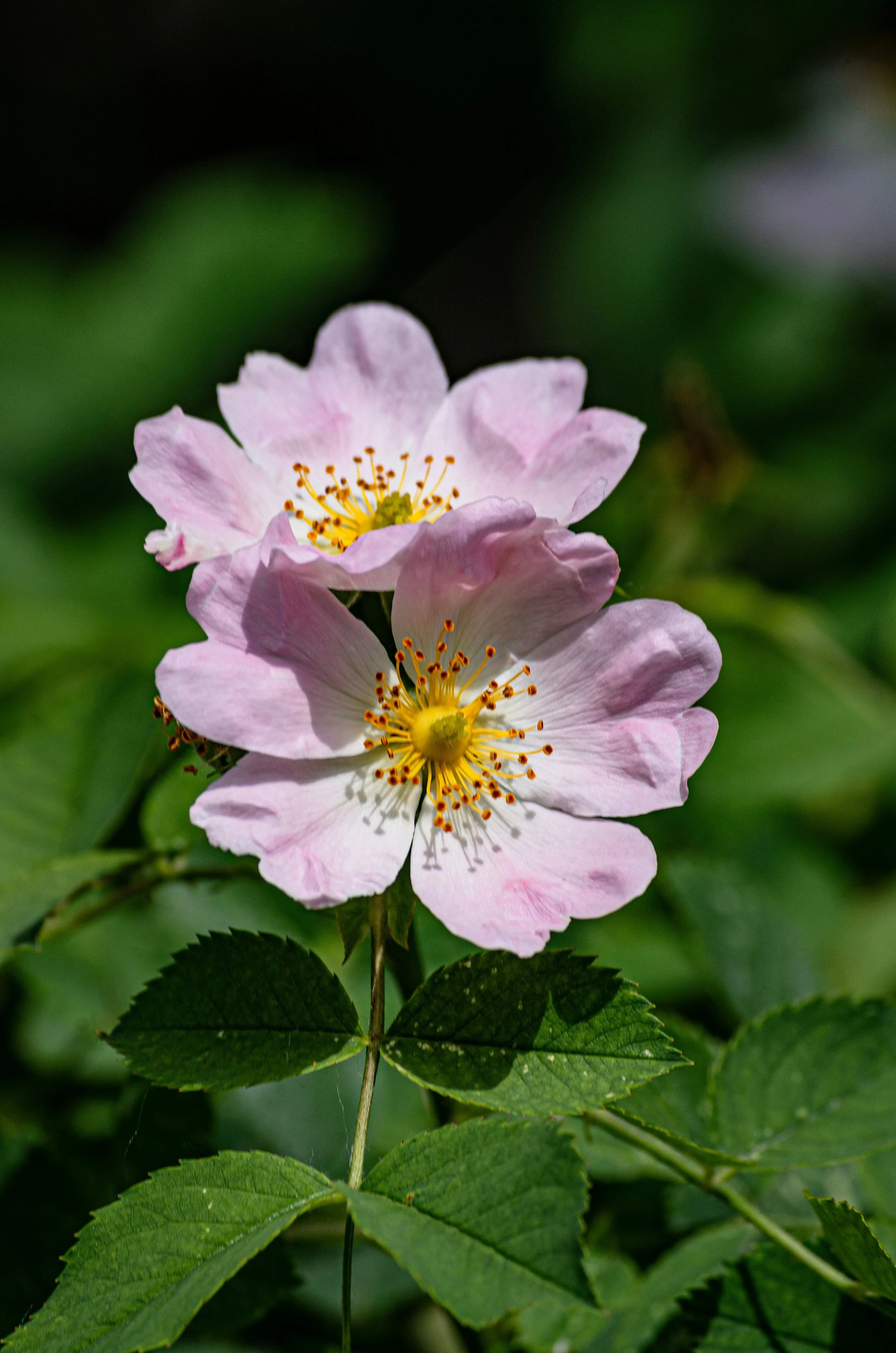
Pale pink flowers of the Dog Rose
Rosa canina is a deciduous rambling shrub, with arching stems, pinnate leaves, and hooked thorns, which help the plant to scramble up walls and taller trees. The flower petals vary from white to a soft pink and surround multiple stamens. The hips mature from green to a beautiful vivid red, making the shrub easy to spot when wandering along the hedgerows in the autumn. The hips are a firm favourite in our home. Each autumn, we visit nearby woodlands to forage hawthorn berries, rosehips and sloes, which we often find growing next to one another.
Culinary Uses
The plant has a multitude of medicinal and culinary uses. The hips can be made into syrups, jellies, cordials, sweet wines and teas. The petals, while less fragrant than those of cultivated roses, can be used to make jam.
Rosehip syrup is a fantastic way to get some extra vitamin C during the colder months. The sweet, fruity, slightly tangy flavour is always a hit with my children, and they often ask for a teaspoon of it each morning before school.
Below is a link to my favourite tried-and-tested recipe for rosehip syrup. It’s simple to make and always a big hit in our home.
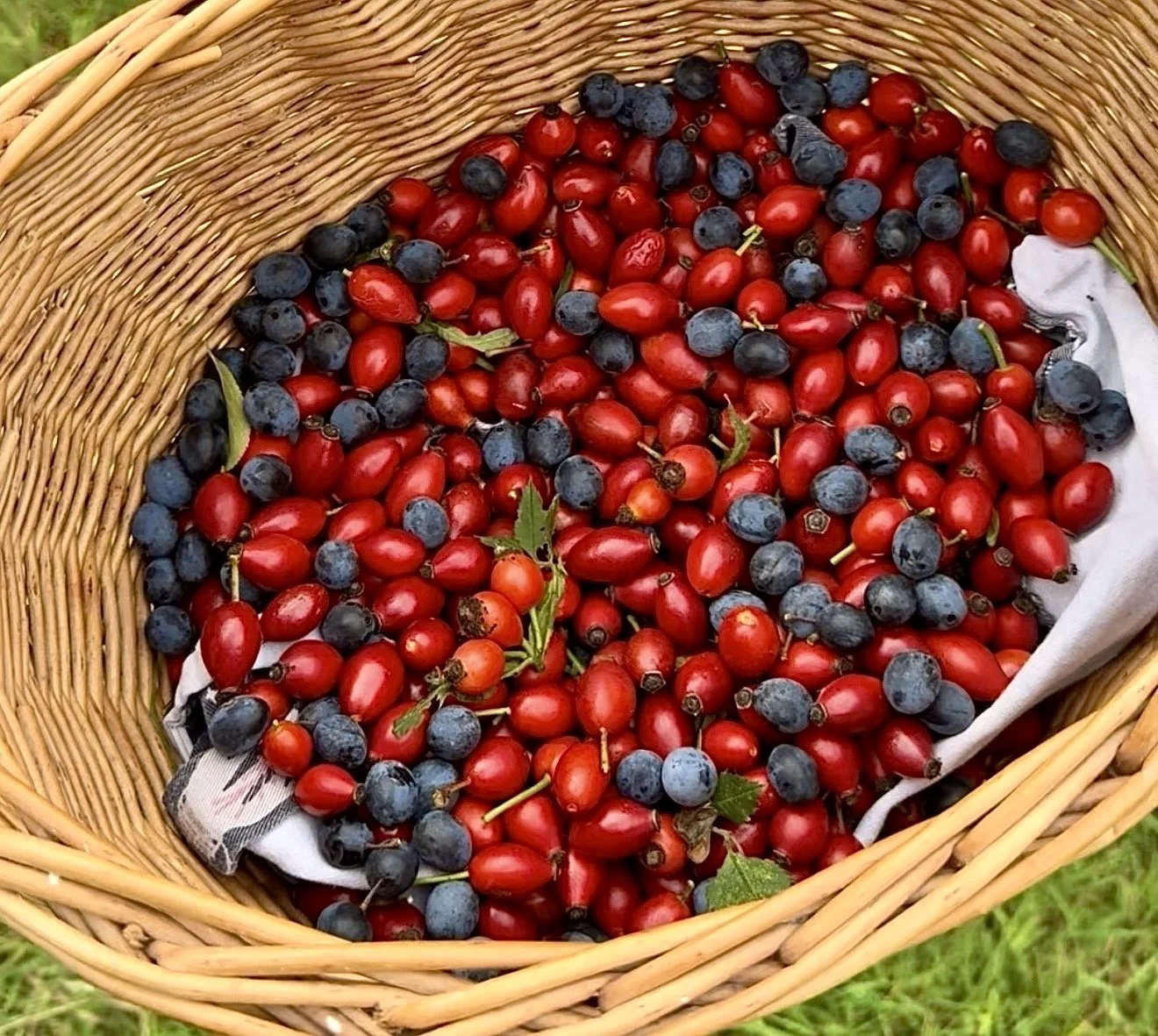
Foraged rosehips and sloes.
Taken in Lincolnshire, October 2025
Medicinal Uses
Beyond its familiar use as a source of rosehips, Dog Rose has a long history in traditional herbal medicine. Its astringent, anti-inflammatory and antimicrobial properties have made different parts of the plant useful internally and externally.
The leaves contain tannins and other plant compounds and have traditionally been used for digestive issues such as diarrhoea, stomach upset and inflammation. Their astringent quality gives them a gently binding and toning action. Herbalist Lucy Jones also makes an interesting distinction between the leaves: younger leaves are said to have a more laxative effect, while older leaves become more astringent and therefore more binding - worth taking into account if you plan on using the leaves internally.
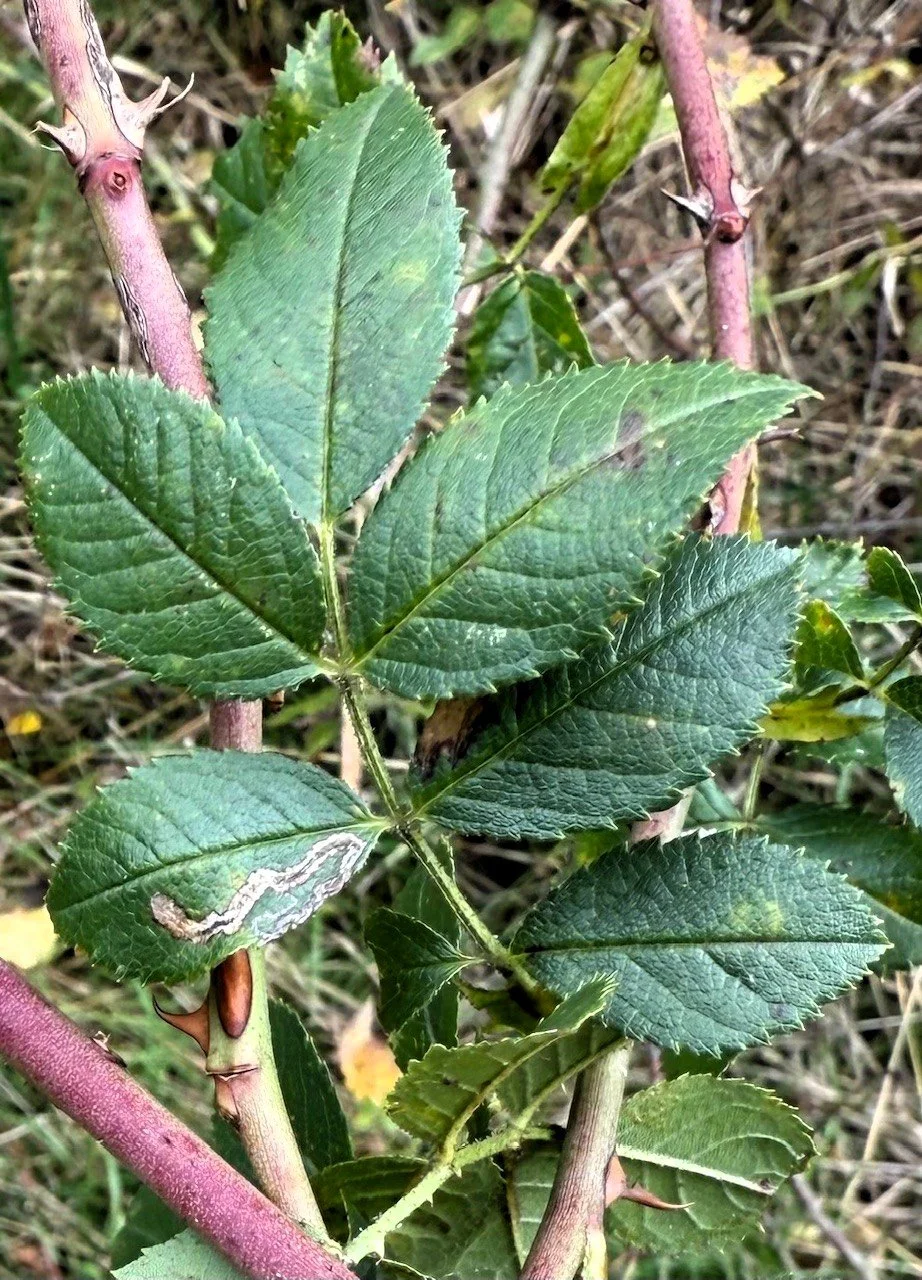
Dog Rose has also traditionally been used topically for wounds and irritated skin. The astringency of the leaves helps to tone and protect damaged tissue. Modern research into Rosa canina has found antioxidant, anti-inflammatory, and antibacterial activity, particularly in studies of the leaves and hips.
While rose is often associated with emotional wellbeing, skincare and women's health, it is worth remembering that these traditions do not necessarily refer specifically to Rosa canina. For Dog Rose, the better-established herbal traditions focus on its astringent and restorative qualities, digestive uses, and its anti-inflammatory and antimicrobial potential.
Disclaimer
This content is for educational purposes only and is not a substitute for professional medical advice, diagnosis, or treatment. Always consult a qualified medical practitioner/herbalist before starting a new herbal regimen.
Always exercise extreme caution and use multiple sources to verify positive identification when foraging and consuming wild plants. Improper identification can be deadly. Don’t forage near heavily trafficked roads, areas with industrial pollution, and agricultural field edges that may have been sprayed with pesticides. Also, consider that local councils often spray weedkiller in densely populated areas where many medicinal herbs grow.
Books & Websites Referenced
Ali English - Wild Medicine: A Seasonal Journey with Medicinal Plants
Anne McIntyre - The Complete Herbal Tutor
Anne McIntyre - The Complete Women’s Herbal
Lucy Jones - A Working Herbal Dispensary: Respecting Herbs as Individuals
https://wlgf.org/plants/garden-wild-plants/woody-plants/hedge-plants/dog-rose/
http://www.wildflowerweb.co.uk/plant/412/dog-rose
